

A night in a yurt under Kyzylkum stars is one of the most memorable episodes on a Silk Road route. It is not wild camping but a gentle step into nomad tradition: a round dwelling, dinner by the fire, desert silence and sunrise over Lake Aydarkul.
The experience fits naturally between Samarkand and Bukhara — you keep the city classics and add contrast: turquoise domes give way to open steppe.
Summary
The essentials in a minute
In detail
What a night in a yurt is like
Modern yurt camps in Uzbekistan are tourist infrastructure in nomad style: beds or mattresses with linen inside, electricity, shared shower block. Outside — a felt yurt; inside cosy and warm in the evening.
Evenings usually bring dinner by the fire — plov, bread, tea. Stars without city light pollution are rare for European guests. Mornings — quiet, birds, desert or lake views.
This is not an extreme trek: no backpack and tent setup. But not a five-star hotel either — expect simple, authentic comfort.
Aydarkul and the Kyzylkum: where it is
Aydarkul is a salt lake in the steppe between Samarkand and Bukhara, in the Kyzylkum desert zone. The drive from Samarkand is usually 3–4 hours on steppe roads. The landscape shifts: cities fade, the horizon widens.
Camps sit by the water or on a rise with steppe views. By day you can walk to the shore, take a short camel ride or rest in the shade.
This is not Sahara-style giant dunes but soft steppe desert — sand, scrub, open sky. Caravan atmosphere without a hard expedition.
Season: when to go and when not
Best time — April–May and September–October: warm days, cool nights, comfortable in the yurt and on walks. Spring greens the steppe; autumn gives soft light for photos.
Summer (June–August) — +35…+40 °C by day in the steppe, hot nights in the yurt without air conditioning. Possible but we do not recommend a desert night in mid-July — shift dates or choose a city route.
Winter — cold nights, camps partly closed. Desert classic is spring and autumn.
Fitting it into Samarkand — Bukhara
Standard pattern: 2 nights in Samarkand → sightseeing → transfer to camp (lunch en route) → evening in the yurt → Aydarkul morning → road to Bukhara (another ~4–5 hours). Or reverse: Bukhara → desert → Samarkand.
You do not lose city days — the desert night replaces one transfer and adds emotion. The Afrosiyob train does not connect directly — you need a car, included on tours.
On In the Footsteps of Caravans — 5 days / 4 nights this logic is already built in. Nurata is not part of that scheme by itself: the town, the lake and the camp are different questions, covered in “Nurata and the Chashma complex”.
Soft logistics: what to pack and what not to expect
Pack: warm layer for evening (spring and autumn nights are cool), torch, power bank, sunscreen, hat, closed shoes for the steppe.
Do not expect: Wi‑Fi in every yurt, en-suite bathroom, absolute silence (neighbouring groups sometimes). Do expect — stars, fire, simple dinner and a «I am on the Silk Road» feeling.
Shower and toilet are shared but clean. A trade-off for an experience you cannot repeat at a hotel by Registan.
Desert on NarminTour routes
A yurt night appears on routes where caravan spirit matters, not only medressas. In the Footsteps of Caravans — compact with Aydarkul. Silk Road: Taste of Time — 7 days — more city time plus a desert pause. Oases of turquoise domes — long route with Khiva and a steppe night.
NarminTour books the camp, organises transfer and dinner — you watch the stars.
Takeaway
Conclusion
A night in a yurt at Aydarkul is a gentle contrast to Silk Road cities. Best in spring and autumn, logical between Samarkand and Bukhara. Ready programmes: In the Footsteps of Caravans, Silk Road: Taste of Time and Oases of turquoise domes from NarminTour.
FAQ
Frequently asked questions
01Is sleeping in a yurt comfortable?+
02Can I go in summer?+
03How to reach the camp independently?+
04Which NarminTour trips include a yurt night?+
More from the blog
Read next
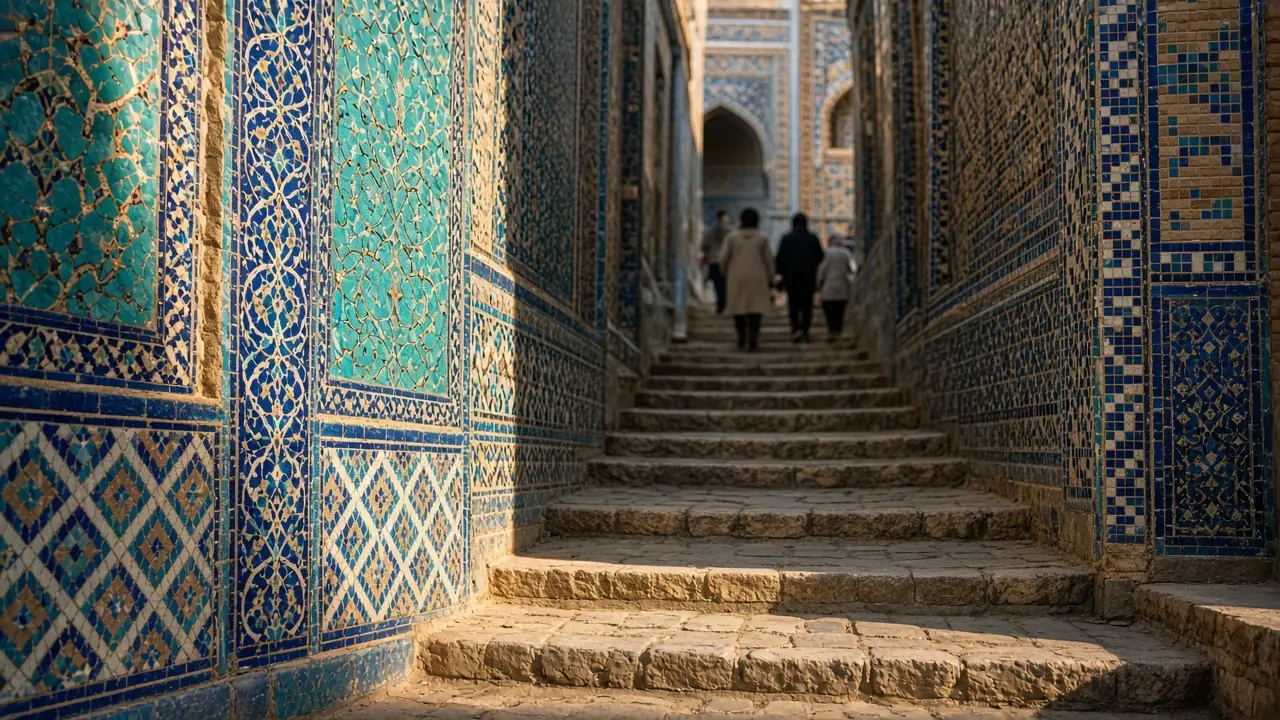 6 min
Cities·15 Oct 2026
Shah-i-Zinda: how to see more than the turquoise passage in a photograph
In photographs Shah-i-Zinda often looks like a narrow passage between bright facades. On site it is an ensemble of mausoleums with historic and religious meaning, not one decorative building. It deserves its own part of getting to know Samarkand. The ensemble stands on its own, near ancient Afrasiab, not on Registan square. As you move, the whole view gives way to a portal, then to one ornament, then to the space between the buildings.
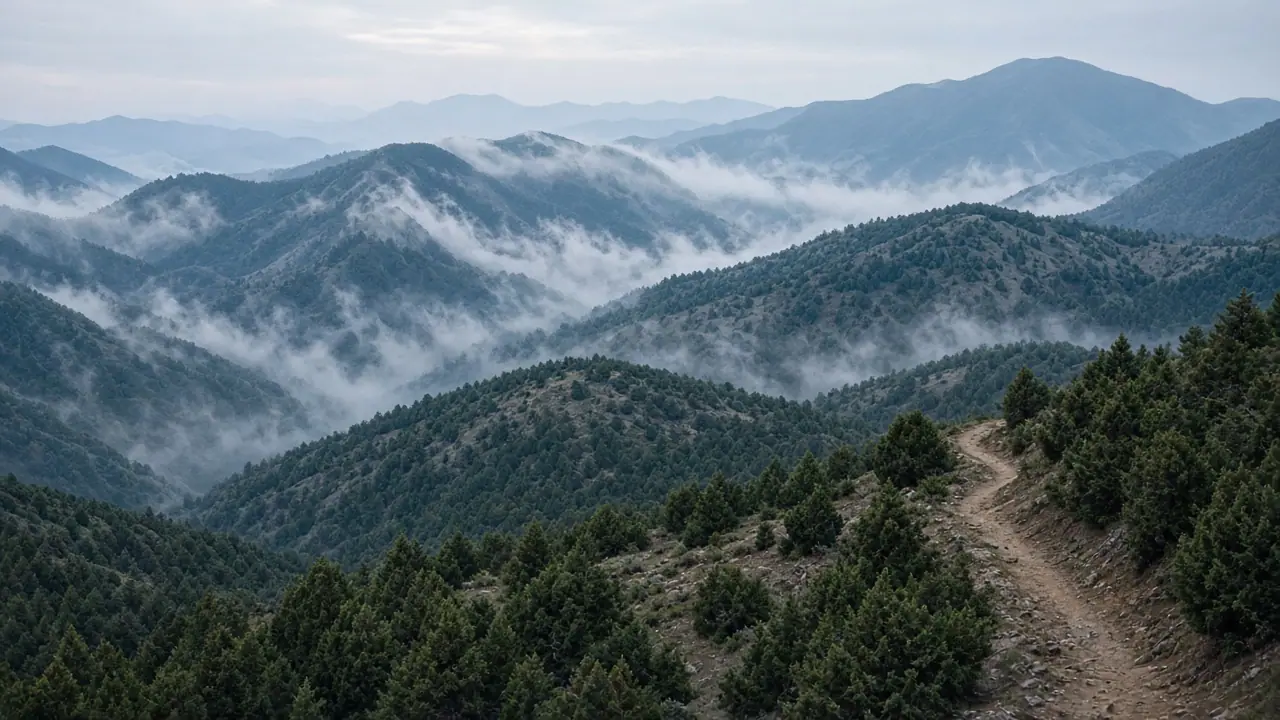 6 min
Uzbekistan·15 Oct 2026
Zaamin: how to plan a rest among mountains and juniper woods
After several days of sightseeing you may want mountains and some unplanned time. Zaamin, in Jizzakh Region, is one such direction. It is known for its landscapes, including juniper woods, called archa locally. The word Zaamin does not explain the trip. A mountain hotel, a walk on a path agreed in advance, and visits to separate sites are different activities. Choose the content of the rest first, and only then build the road around it.
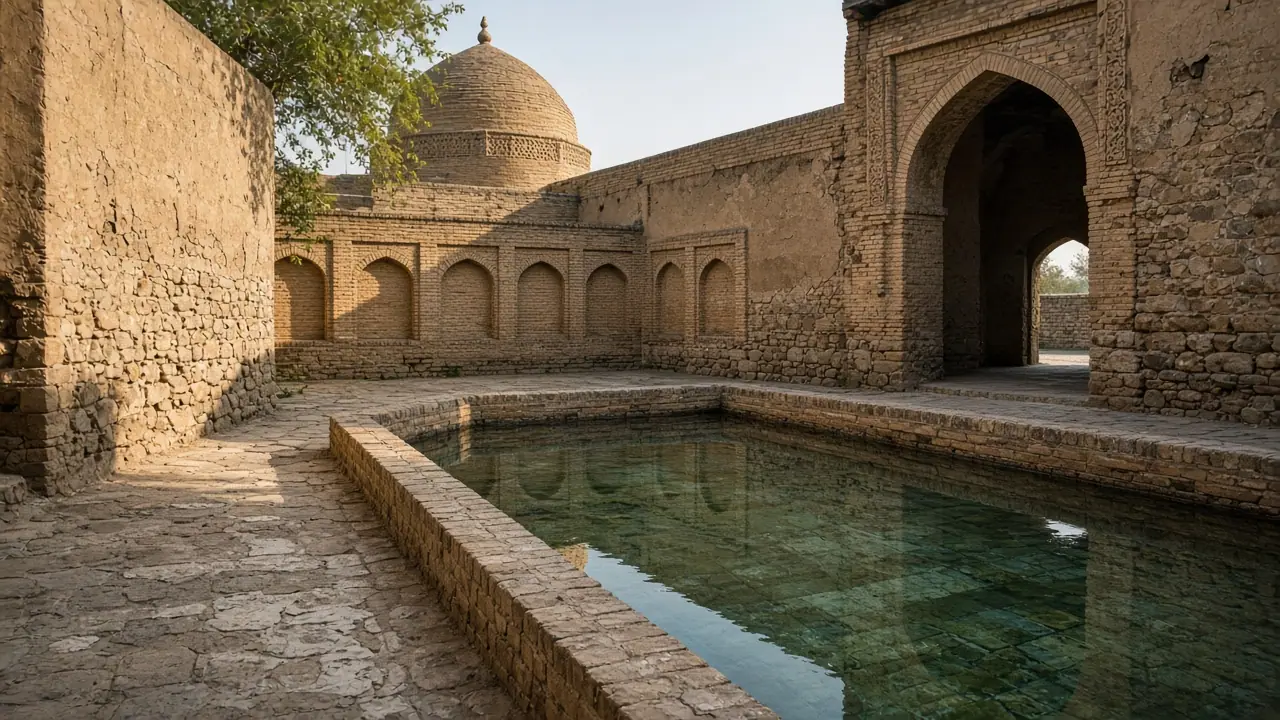 6 min
Routes·15 Oct 2026
Nurata and the Chashma complex: a stop with a reason of its own
Nurata is often mentioned only as a way to Aydarkul or to a yurt camp. The town deserves more than that: it has its own reason for a stop. The Chashma complex — a spring and the historic buildings beside it — is a subject of its own. It is a revered place, and a visit has to respect people who did not come for a tour. Nurata is in Navoi Region. Putting it into a trip changes the logic of the road. It is no longer a supposedly short detour “on the way”, but its own calculation of stops and time.
