


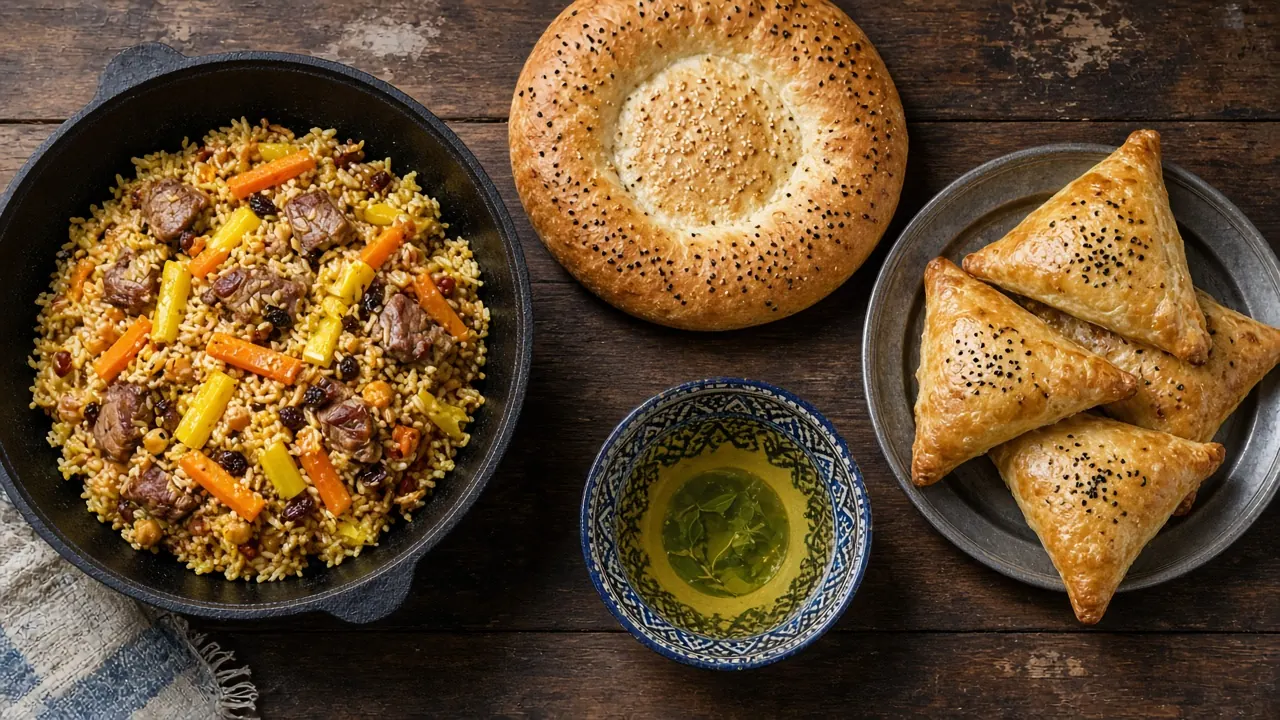
Planning food in Uzbekistan deserves the same care as planning trains and sightseeing. Tashkent, Samarkand, Bukhara and Khiva each give you a different daily rhythm, market culture and reason to stop at the table. Plov changes from region to region, while non bread, samsa, tea, dried fruit and rice dishes unfold differently according to place, season and the individual kitchen.
This is not a list of the one “correct” dishes, nor is it a promise of a fixed menu. It is a practical guide to city-by-city planning: when to leave time for a market, what to clarify before booking and why food needs to be discussed before an itinerary is confirmed. For food-focused travel formats, see our guide to gastronomy tours in Uzbekistan.
Summary
The essentials in a minute
In detail
Start with the route, not a dish ranking
Uzbek cuisine is not reduced to a single “main” recipe. Plov and other rice dishes vary by city, family, season and what is available in the kitchen; non bread, samsa and tea also make most sense in their local setting. Rather than looking for one true origin or a model version, decide in advance where you want a proper lunch, a tea pause and market purchases.
That approach avoids two unhelpful extremes: trying to eat everything on the first day or treating food as a random stop between transfers. If you want to try several dishes, ask about portion size and share an order. Dried fruit, nuts and non are useful additions for the road, not substitutes for a balanced meal.
Tashkent: use Chorsu as your first point of reference
Chorsu is one of Tashkent’s best-known markets and a good place to meet the ingredients of the trip. You can see spices, seasonal fruit, dried fruit, non bread and prepared food here, but there is no need to turn the market into a tasting marathon. Pick a few categories that interest you, buy small quantities and leave room for a later lunch.
Market etiquette is straightforward and makes the experience more comfortable: clarify the price and quantity before packing, ask before photographing a seller and feel free to say you would like to compare options. With an allergy or a strict diet, do not rely on appearance alone — ask about ingredients and preparation.
Samarkand: Siab, bread and time after sightseeing
Siab Bazaar near the historic centre is a well-known food stop in Samarkand. It fits well into a day that already includes the monuments, because then there is time not only to shop but also to talk about local products. Non bread, tea and dried fruit can become a calm pause between sights rather than another task on a list.
Do not use one purchase to define the “real” cuisine of an entire region. Ask what is in season, taste a small amount and compare flavours as your route unfolds. If you plan a rice dish, treat it as a full meal, not a light extra after a dense sightseeing schedule.
Bukhara: leave space for a slower table
In Bukhara, food planning benefits especially from pauses. Spread old-city walks, tea, non bread, sweets and dried fruit across the day instead of loading one section of it too heavily. Rather than assigning every district a compulsory dish in advance, leave room for your local host’s recommendation and for choices that are genuinely available on your dates.
Regional variation matters more here than rigid lists. The same menu name does not guarantee the same flavour, ingredients or serving style, and a particular venue may operate differently in high season, on a holiday or on a transfer day. When booking, say whether you want a relaxed lunch, a short tea break or more time for a market.
Khiva, booking and dietary requirements
In Khiva, connect food to the pace of walking and transfer times: the historic centre invites a day on foot, so plan a lunch break before energy runs low. Samsa, non bread, tea, dried fruit and rice dishes may all be part of your choices, but do not assume that a particular dish or restaurant will automatically feature in every programme.
At your first enquiry, share allergies, vegetarian requirements, religious restrictions, intolerances and important preferences. We will check the viable options against the final itinerary, season, hotels and available dining points, but we do not promise menu adaptation before that confirmation. Compare current food-oriented programmes in “Journey into the World of Flavours — Gastronomic Festival”, “Symphony of Flavours — Gastronomic Map of the Silk Road” and “Wine and Poetry”; the actual meal arrangements are confirmed before booking.
Takeaway
Conclusion
A flavourful Uzbekistan route begins not with a hunt for the single “right” plov, but with enough time for each city and clear arrangements before booking. Tell NarminTour about your pace, interests and dietary needs, and we will check the options against the final programme and season.
FAQ
Frequently asked questions
01Is there one correct version of plov?+
02Which markets should I include in my plan?+
03Can vegetarian needs or allergies be accommodated?+
More from the blog
Read next
 8 min
8 minVisa & entry·6 Oct 2026
Uzbekistan for travellers from Korea: visa-free entry up to 30 days and trip planning
Citizens of the Republic of Korea may visit Uzbekistan visa-free for up to 30 days. The official Uzbekistan Airways page says this visa-free regime has applied since 10 February 2018. For a first visit, that lets you focus on the route, time between cities and travel documents instead of arranging a short-stay visa. Eligibility depends on citizenship and the individual trip, not on the airport you depart from. Your passport must be valid, and current entry and boarding requirements must be confirmed with an official authority or carrier before flying. This article is a planning guide, not a legal guarantee of admission.
 8 min
8 minVisa & entry·6 Oct 2026
Uzbekistan for US citizens in 2026: 30 visa-free days and trip planning
From 1 January 2026, US citizens may enter Uzbekistan visa-free for up to 30 days for business or tourism. That makes a short trip through Tashkent, Samarkand, Bukhara and Khiva easier to plan, but it does not remove the need to check documents before departure. This is a practical preparation guide: what the 30-day visa-free rule means, which passport conditions apply, and when another visa is needed. It is not legal advice or a promise of boarding or admission at the border; rules and carrier requirements can change.
 9 min
9 minCities·6 Oct 2026
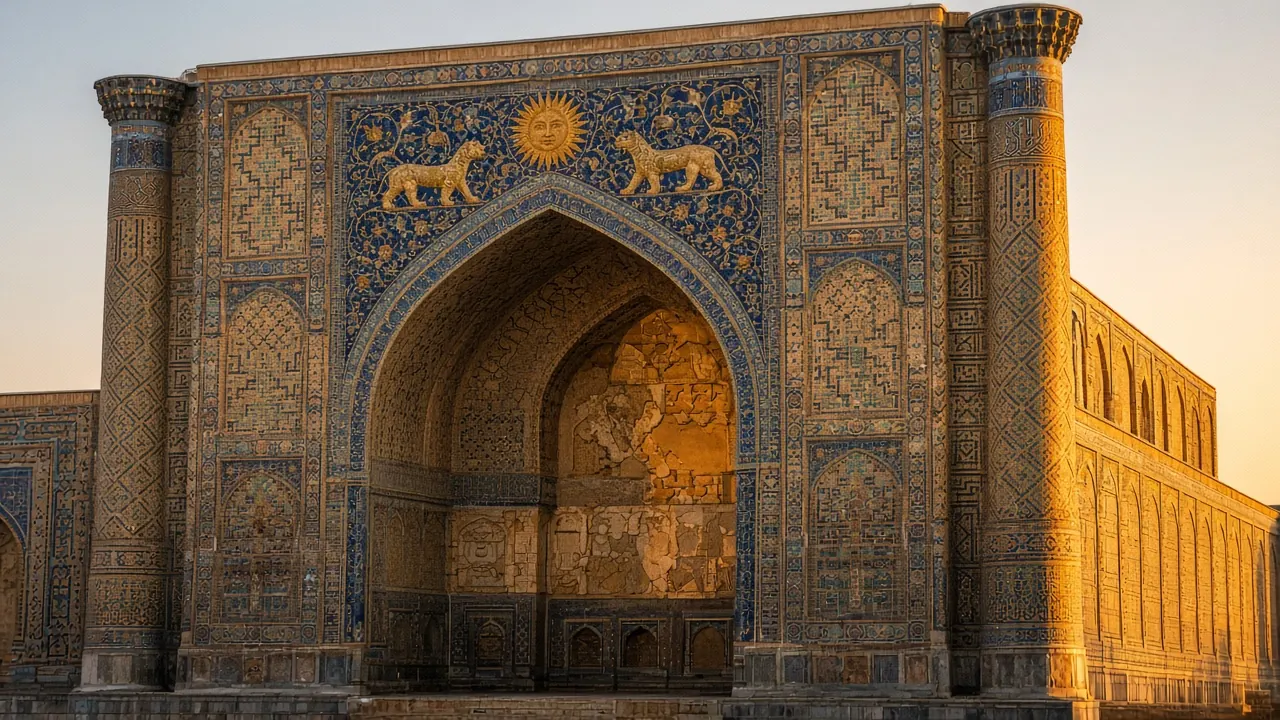
Registan in Samarkand: how to plan an unhurried visit
The Registan is more than Samarkand’s most recognisable square. It is an ensemble of three madrasahs — Ulugh Beg, Sher-Dor and Tilya-Kori. Together they set the scale of Timurid Samarkand: the façades matter, but so do the space between them, the ornament, the courtyards and the story of a city that changed over time. It is easy to place a visit inside a short stop or a wider Uzbekistan itinerary. A day trip from Tashkent and an overnight stay in Samarkand, however, create very different experiences. This guide explains how to choose the right format, give the square proper time and avoid planning around outdated visitor information.
