


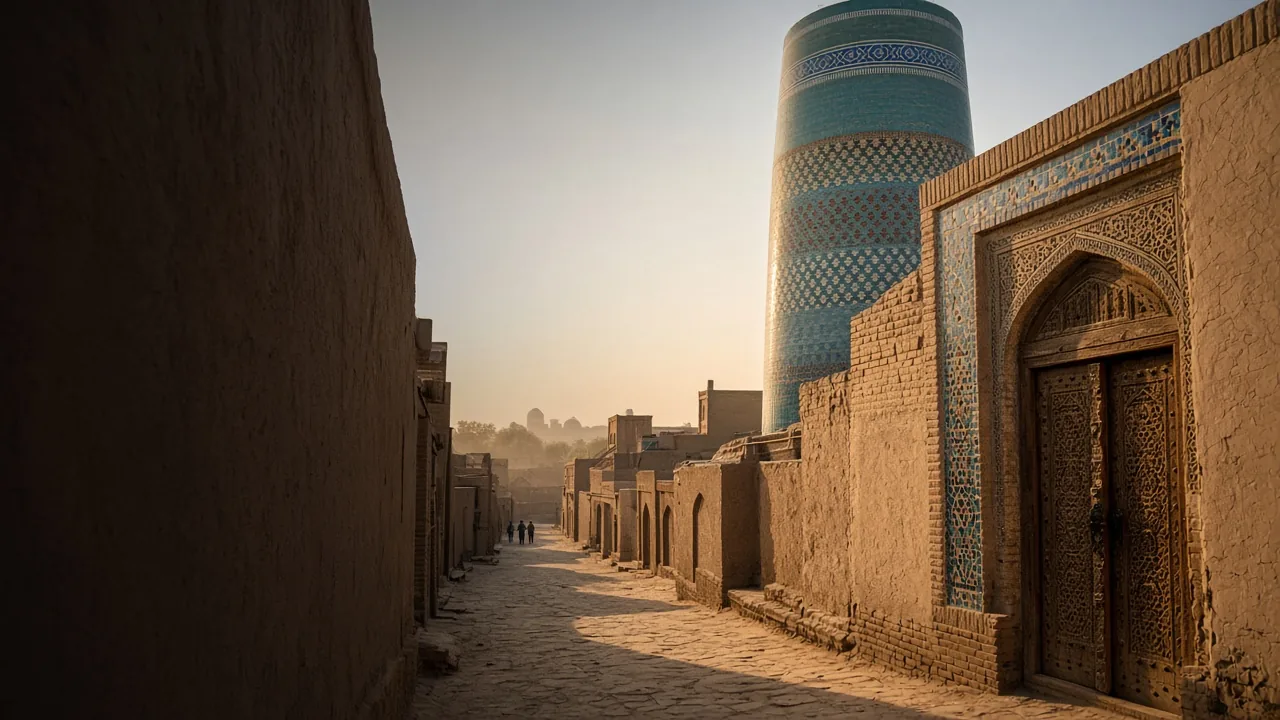
Two days in Khiva are not excessive; they are a good pace for Itchan Kala. Use the first day to understand the walled city and its major ensembles, then use the second for detail, morning light and places you do not want to visit in a crowd.
This plan assumes an overnight in Khiva. Check arrival timing, the transfer from Urgench and the opening arrangements of individual sites closer to the trip.
Summary
The essentials in a minute
In detail
Day 1: find the rhythm of Itchan Kala
Begin with a walk through Itchan Kala to see the city as a whole: walls, gates, minaret silhouettes and narrow lanes. Then choose two or three core sites — Kunya Ark, the wooden-columned Juma Mosque and one madrasa. There is no need to read every plaque in one sweep.
After a daytime break, return to the walls or open viewpoints around sunset. The evening atmosphere is often more rewarding than one extra museum hour.
Day 2: palaces and details easily missed
In the quieter morning, visit Tash Khauli and give its courtyards and decoration time. Then choose the Islam Khoja complex, craft shops or a map-free walk between the gates of Itchan Kala.
If your energy and time allow, leave the afternoon for a favourite place from day one. Khiva is compact, but its value lies in looking again rather than collecting checkmarks.
Overnight stay, travel and ready-made routes
Staying inside or close to the walls is practical: you do not have to fit every walk around a transfer. Stone paths, stairs and uneven surfaces call for comfortable shoes, while summer sightseeing works best early and late.
Khiva is listed on Cradle of Civilizations — 7 days, Classic Uzbekistan — 8 days and Masterpieces of Central Asia — 8 days. Confirm the current transfer order and programme details with the manager before booking.
Takeaway
Conclusion
Two days let you see Khiva properly: first understand Itchan Kala, then return to its palaces, lanes and light. For a route with logistics already considered, see Cradle of Civilizations or Classic Uzbekistan.
FAQ
Frequently asked questions
01Are two days in Khiva too long?+
02Where is best to stay?+
03Which NarminTour routes include Khiva?+
More from the blog
Read next
 8 min
8 minVisa & entry·6 Oct 2026
Uzbekistan for travellers from Korea: visa-free entry up to 30 days and trip planning
Citizens of the Republic of Korea may visit Uzbekistan visa-free for up to 30 days. The official Uzbekistan Airways page says this visa-free regime has applied since 10 February 2018. For a first visit, that lets you focus on the route, time between cities and travel documents instead of arranging a short-stay visa. Eligibility depends on citizenship and the individual trip, not on the airport you depart from. Your passport must be valid, and current entry and boarding requirements must be confirmed with an official authority or carrier before flying. This article is a planning guide, not a legal guarantee of admission.
 8 min
8 minVisa & entry·6 Oct 2026
Uzbekistan for US citizens in 2026: 30 visa-free days and trip planning
From 1 January 2026, US citizens may enter Uzbekistan visa-free for up to 30 days for business or tourism. That makes a short trip through Tashkent, Samarkand, Bukhara and Khiva easier to plan, but it does not remove the need to check documents before departure. This is a practical preparation guide: what the 30-day visa-free rule means, which passport conditions apply, and when another visa is needed. It is not legal advice or a promise of boarding or admission at the border; rules and carrier requirements can change.
 10 min
Food·6 Oct 2026
Uzbek food by city: how to plan a flavourful route
Planning food in Uzbekistan deserves the same care as planning trains and sightseeing. Tashkent, Samarkand, Bukhara and Khiva each give you a different daily rhythm, market culture and reason to stop at the table. Plov changes from region to region, while non bread, samsa, tea, dried fruit and rice dishes unfold differently according to place, season and the individual kitchen. This is not a list of the one “correct” dishes, nor is it a promise of a fixed menu. It is a practical guide to city-by-city planning: when to leave time for a market, what to clarify before booking and why food needs to be discussed before an itinerary is confirmed. For food-focused travel formats, see our guide to gastronomy tours in Uzbekistan.
