

In Uzbekistan cash in som (UZS) is still essential — especially at bazaars, tea houses and for small purchases. Visa and Mastercard work in hotels and larger restaurants, but not everywhere — plastic alone is not enough.
Below: how to exchange currency safely, where to withdraw cash, card quirks (including Russian cards since 2022) and what is usually already paid in NarminTour packages.
Summary
The essentials in a minute
In detail
Currency: Uzbek som
The official currency is the Uzbek som (UZS). The rate floats — expect roughly 12,000 UZS per 1 USD (mid-2026, CB range about 11,900–12,100) — check the central bank rate before exchanging.
Large notes are awkward for small purchases — ask for change. Coins are rarely used. Tip: carry small notes for bazaars and tips — there are no card terminals there.
Exchanging USD and EUR
US dollars are the easiest currency to exchange. Accept new-series notes, clean and undamaged. Old or heavily worn bills may be refused.
Exchange at banks and licensed exchange offices — rates close to market, you get a receipt. Street changers carry fraud risk and poor rates. Avoid unofficial intermediaries at the bazaar or airport (except a small amount for a taxi).
ATMs and cash withdrawal
ATMs exist in Tashkent, Samarkand, Bukhara, Khiva and airports. They take Visa and Mastercard from international banks. Your bank fee plus possible ATM fee applies.
Limits — typically up to ~3 million UZS per transaction (~$250). Withdraw larger amounts less often. Hotel 4–5★ and major bank ATMs are more reliable in tourist areas.
Cards: what works
Visa/Mastercard from EU and US banks — hotels, mid-upper restaurants, some supermarkets and airports. But even international cards are sometimes declined — terminal offline or bank blocks the transaction. Apple Pay / Google Pay — limited, do not rely on them.
Russian Mir cards are generally not accepted in Uzbekistan since 2022 — this differs from Uzbek co-branded cards. Tip: bring USD cash to exchange and an international Visa/Mastercard or a backup card from another bank/country.
Where cash is required
Bazaars (Siab, Tim, trading domes, stalls by medressas) — almost cash only. No cards accepted. Tea houses and street food — cash. Tips for guide and driver — som or USD cash.
Souvenirs, workshops, taxis without apps — cash. On NarminTour trips major entrance fees and transfers are already in the package — pocket money covers lunches, souvenirs and personal spending.
What a NarminTour package covers
Usually paid: hotels, breakfasts, transfers, transport, guide, route entrance fees. Not included: international flights, meals outside programme, alcohol, souvenirs, tips, insurance.
So on a tour you need less cash than travelling independently. Pocket money guide — about $30–50 per day for lunches, tea, small shopping. On routes like Classic Uzbekistan, Land of Smiles and Treasures of Uzbekistan your manager can advise the current amount.
Takeaway
Conclusion
Bring USD cash to exchange at a bank and plan for som in your wallet daily. Cards are a backup, not the main plan. On a NarminTour trip major costs are covered — see Classic Uzbekistan, Land of Smiles and Treasures of Uzbekistan.
FAQ
Frequently asked questions
01Can I pay in US dollars?+
02Does Mir card work in Uzbekistan?+
03How much cash per day?+
04Should I exchange at the airport?+
More from the blog
Read next
 6 min
Cities·15 Oct 2026
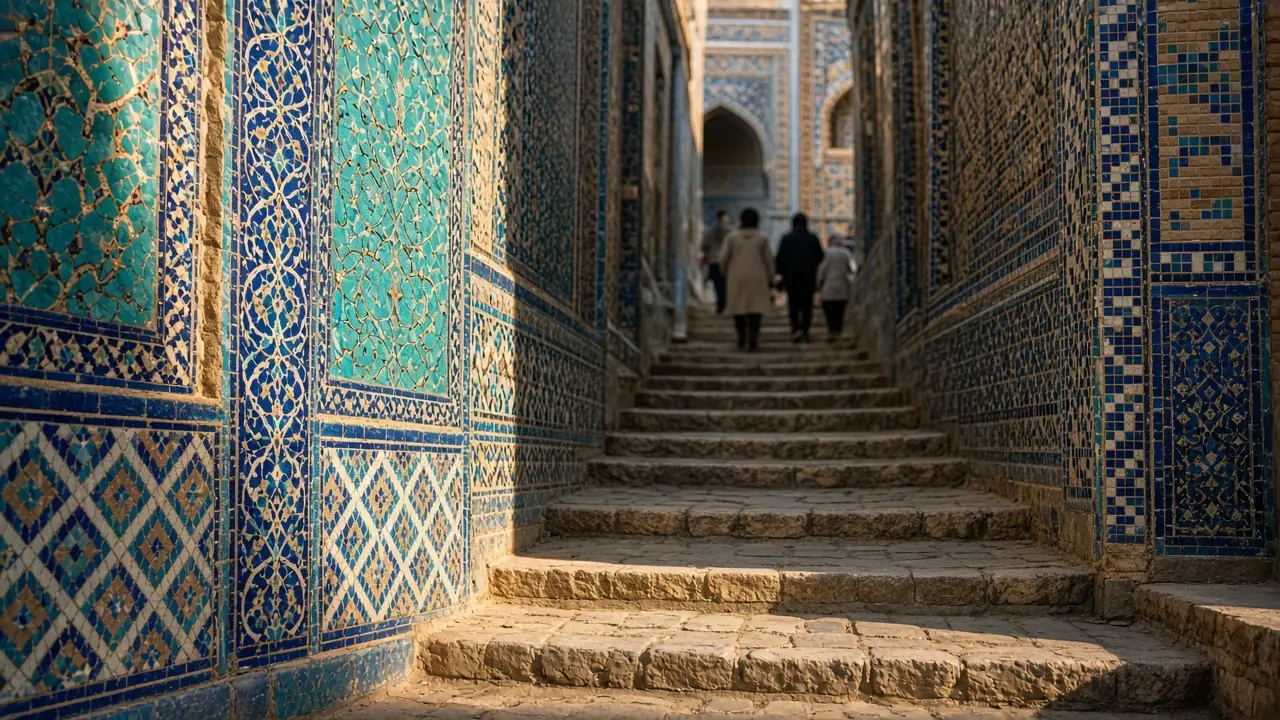
Shah-i-Zinda: how to see more than the turquoise passage in a photograph
In photographs Shah-i-Zinda often looks like a narrow passage between bright facades. On site it is an ensemble of mausoleums with historic and religious meaning, not one decorative building. It deserves its own part of getting to know Samarkand. The ensemble stands on its own, near ancient Afrasiab, not on Registan square. As you move, the whole view gives way to a portal, then to one ornament, then to the space between the buildings.
 6 min
Uzbekistan·15 Oct 2026
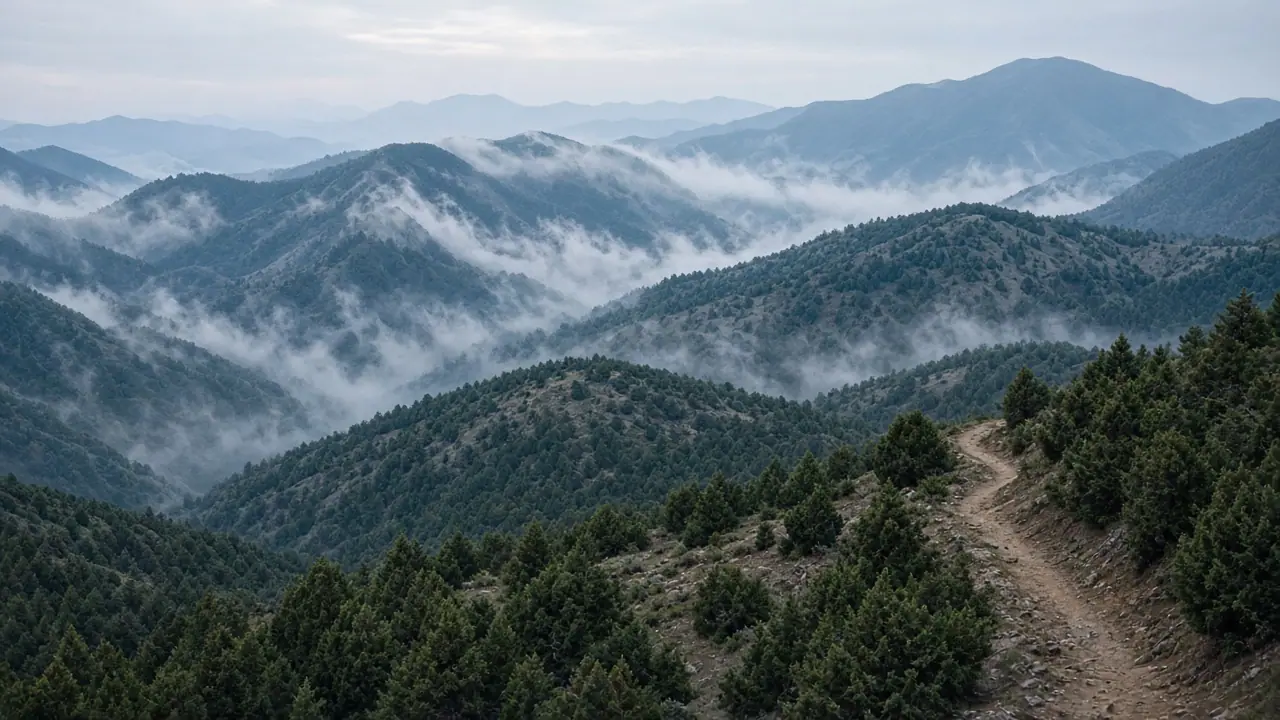
Zaamin: how to plan a rest among mountains and juniper woods
After several days of sightseeing you may want mountains and some unplanned time. Zaamin, in Jizzakh Region, is one such direction. It is known for its landscapes, including juniper woods, called archa locally. The word Zaamin does not explain the trip. A mountain hotel, a walk on a path agreed in advance, and visits to separate sites are different activities. Choose the content of the rest first, and only then build the road around it.
 6 min
Routes·15 Oct 2026
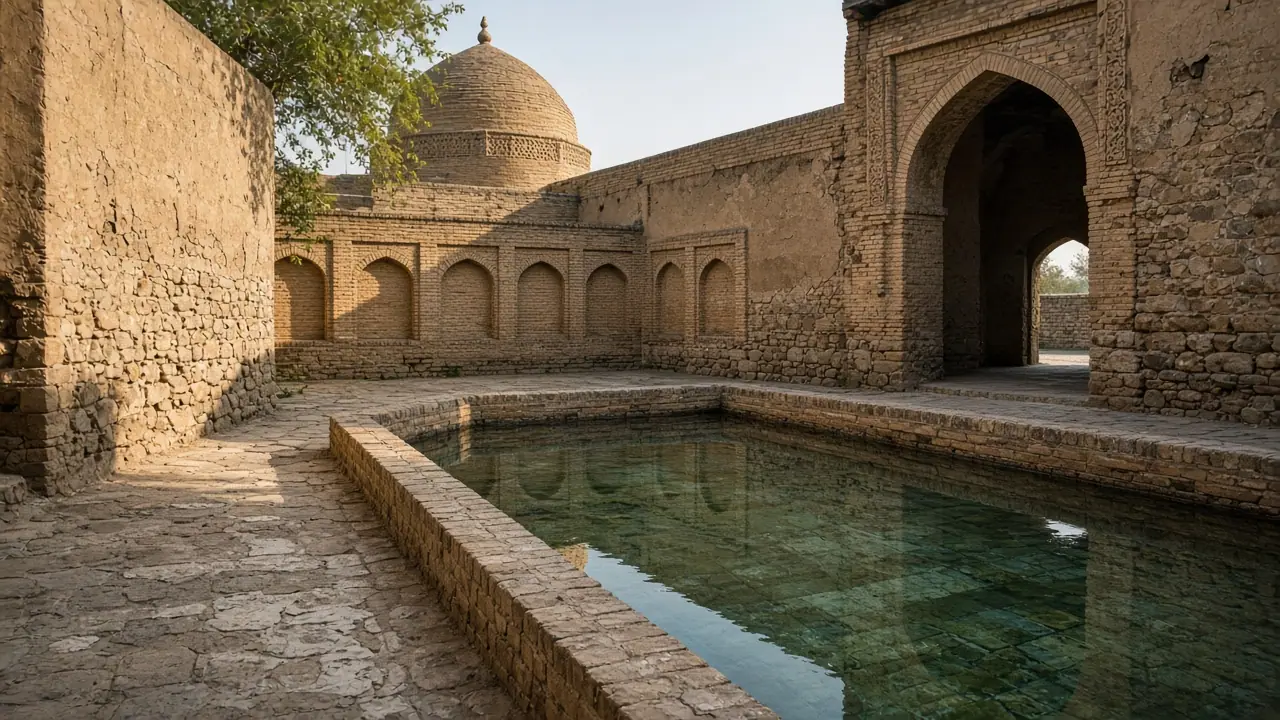
Nurata and the Chashma complex: a stop with a reason of its own
Nurata is often mentioned only as a way to Aydarkul or to a yurt camp. The town deserves more than that: it has its own reason for a stop. The Chashma complex — a spring and the historic buildings beside it — is a subject of its own. It is a revered place, and a visit has to respect people who did not come for a tour. Nurata is in Navoi Region. Putting it into a trip changes the logic of the road. It is no longer a supposedly short detour “on the way”, but its own calculation of stops and time.
