


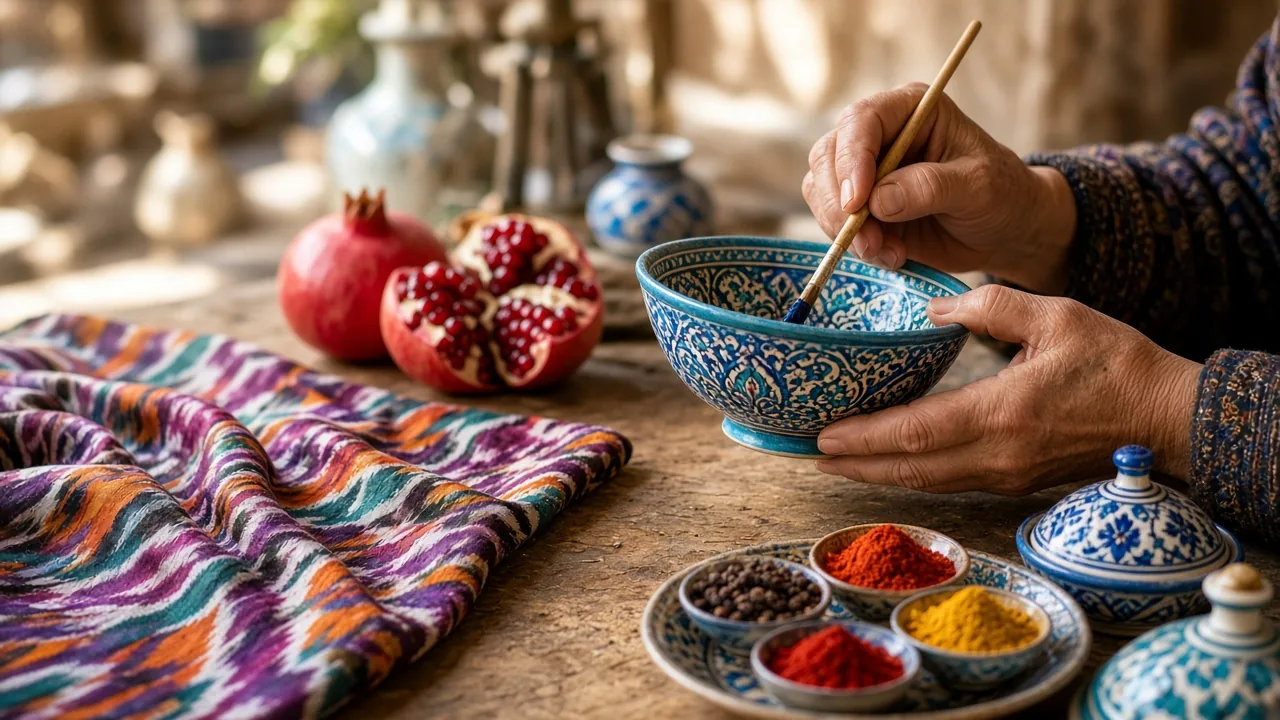
The best souvenirs from Uzbekistan do not need to be expensive or identical: a hand-painted bowl from a workshop, a length of adras fabric, a box of dried fruit or a small jar of cumin may recall a trip more vividly than a magnet. The key is choosing an item in its city and craft context instead of buying everything at the last airport shop.
Below is a practical list, guidance for respectful buying and packing. Leave room in your luggage for fragile or edible purchases, and check current customs and carrier rules whenever they apply to your route.
Summary
The essentials in a minute
In detail
Ceramics and textiles: choose the story behind the object
Rishtan ceramics are valued for handwork and distinctive painting, while Margilan is known for silk, ikat and adras. Ask where an item was made, what it is made from and how it should be cared for. On ceramics, inspect the rim, glaze and base; on textiles, check density, seams and the consistency of the pattern. A small bowl or cushion cover is often easier to carry and use at home than a heavy set.
When buying in a workshop, watch the process first and ask permission before taking photos. Buying directly from a craftsperson helps you understand the item’s origin and supports a living craft. For the valley, see Exclusive tours from the Fergana Valley and Exclusive tour to the Eastern Pearl — VIP.
Dried fruit, nuts and spices: buy small amounts
For edible gifts, choose products that are easy to taste and pack: dried apricots, raisins, prunes, nuts, halva, cumin, coriander or a prepared spice blend. Check aroma and dryness, confirm the weight and ask for a sealed or neat package if the gift calls for it. Do not buy too much before tasting: every bazaar and seller has a different profile.
Before crossing a border, carrying food in hand luggage or checked baggage, or making a declaration, check the rules of your destination, any transit country and the carrier. They depend on the route and may change.
Where to shop, how to bargain and how to pack
In Tashkent it is easy to compare choice at major markets; in Samarkand and Bukhara you can choose pieces alongside a historic itinerary; in the Fergana Valley, look for craft workshops. Bargain calmly and kindly: ask the price, compare similar items, but do not devalue handwork. A receipt or maker’s card is useful both as a memory and for care instructions.
Wrap bowls and plates in soft clothing or protective material, fill empty space in the box and make sure fragile items cannot move. Check the carrier’s hand-luggage and baggage requirements. The Classic Uzbekistan route lets you collect souvenirs in several cities rather than buying everything in one place.
Takeaway
Conclusion
Look for ceramics and fabric where you can meet the craft, and edible gifts where you can taste before buying. Leave room in your luggage, pack fragile items carefully and check applicable transport rules. For craft-focused travel, see Exclusive tours from the Fergana Valley, Eastern Pearl VIP or Classic Uzbekistan.
FAQ
Frequently asked questions
01Where is the best place to buy ceramics in Uzbekistan?+
02How should I pack bowls and plates for a flight?+
03Can I take dried fruit and spices home?+
More from the blog
Read next
 8 min
8 minVisa & entry·6 Oct 2026
Uzbekistan for travellers from Korea: visa-free entry up to 30 days and trip planning
Citizens of the Republic of Korea may visit Uzbekistan visa-free for up to 30 days. The official Uzbekistan Airways page says this visa-free regime has applied since 10 February 2018. For a first visit, that lets you focus on the route, time between cities and travel documents instead of arranging a short-stay visa. Eligibility depends on citizenship and the individual trip, not on the airport you depart from. Your passport must be valid, and current entry and boarding requirements must be confirmed with an official authority or carrier before flying. This article is a planning guide, not a legal guarantee of admission.
 8 min
8 minVisa & entry·6 Oct 2026
Uzbekistan for US citizens in 2026: 30 visa-free days and trip planning
From 1 January 2026, US citizens may enter Uzbekistan visa-free for up to 30 days for business or tourism. That makes a short trip through Tashkent, Samarkand, Bukhara and Khiva easier to plan, but it does not remove the need to check documents before departure. This is a practical preparation guide: what the 30-day visa-free rule means, which passport conditions apply, and when another visa is needed. It is not legal advice or a promise of boarding or admission at the border; rules and carrier requirements can change.
 10 min
Food·6 Oct 2026
Uzbek food by city: how to plan a flavourful route
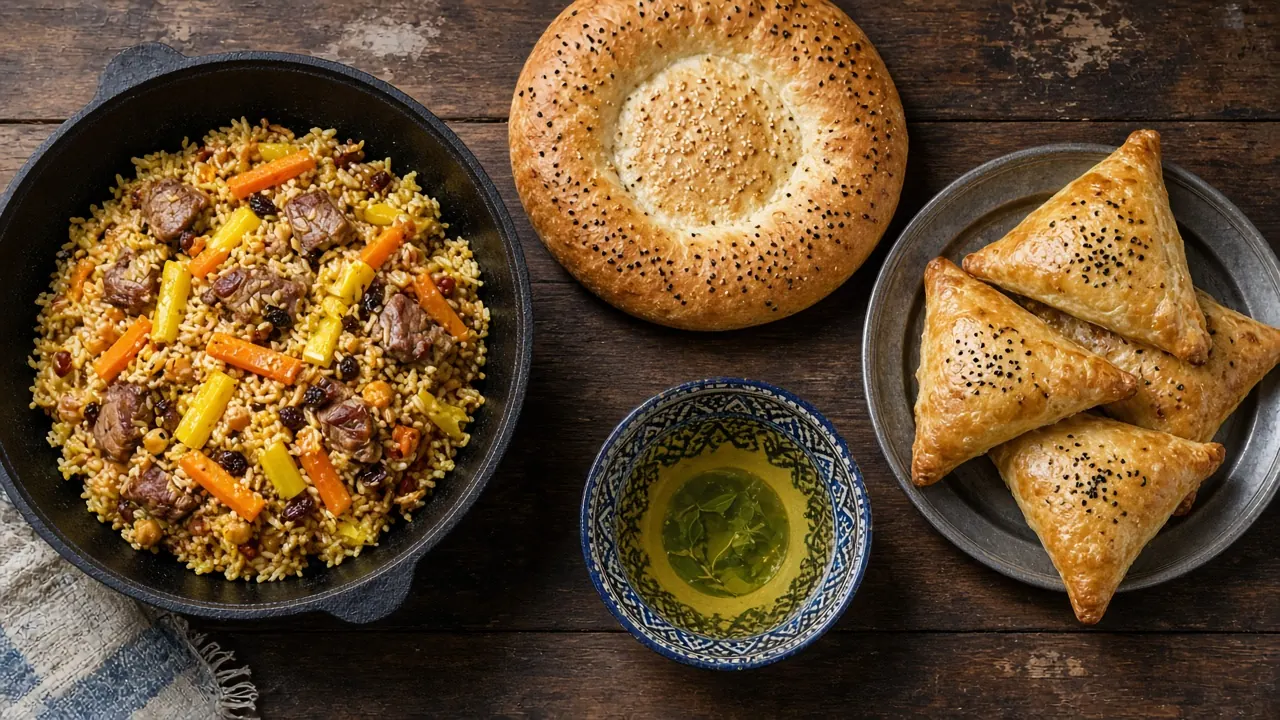
Planning food in Uzbekistan deserves the same care as planning trains and sightseeing. Tashkent, Samarkand, Bukhara and Khiva each give you a different daily rhythm, market culture and reason to stop at the table. Plov changes from region to region, while non bread, samsa, tea, dried fruit and rice dishes unfold differently according to place, season and the individual kitchen. This is not a list of the one “correct” dishes, nor is it a promise of a fixed menu. It is a practical guide to city-by-city planning: when to leave time for a market, what to clarify before booking and why food needs to be discussed before an itinerary is confirmed. For food-focused travel formats, see our guide to gastronomy tours in Uzbekistan.
