

Bukhara is one of the oldest Silk Road cities, where medressas and minarets stand a block apart. In 1–2 days you can see the highlights without rushing if you plan the route well.
Below are the key sights, walking pace and how Bukhara fits into NarminTour routes like Classic Uzbekistan.
Summary
The essentials in a minute
In detail
Lyabi-Hauz — heart of old Bukhara
Lyabi-Hauz square is the perfect starting point. Around the pool — Kukeldash medressa (16th c., 1568–1579), Nodir Divanbegi medressa and khanaka (~1620s).
Stop for tea, enjoy evening music and feel the city's rhythm. Tip: come at dawn or after 5 pm — less heat and fewer crowds.
Poi-Kalyan — symbol of Bukhara
The Poi-Kalyan ensemble — Kalyan minaret (12th c.), Kalyan mosque and Mir-i-Arab medressa. The minaret is visible from afar — a landmark for the whole old town.
Approach from the south and walk around the complex. Active mosques require covered shoulders and knees — bring a scarf.
The Ark — rulers' citadel
The Ark is the ancient citadel and residence of Bukhara's emirs, now a museum: throne hall, palace, history displays.
Allow 1–1.5 hours. Nearby — Bolo Hauz mosque and old city walls. Great dome views from the Ark for photos.
Trading domes and bazaars
Covered trading domes (Toki-Zargaron, Toki-Sarrafon, Toki-Telpak Furushon) feel like a caravanserai. Souvenirs, fabrics, knives, spices — bargain gently with a smile.
Tip: cash in som works best at markets. Visit a tea house for plov in the evening — cultural experience as much as food.
Day 2 extras: Samanids and Chor Minor
With a second day — the Samanid mausoleum (9th–10th c.) outside the tourist core: austere brick architecture, among the oldest buildings.
Chor Minor (four minarets) is picturesque but small; combine with neighbourhood walks. Ulugbek medressa and Abdulaziz Khan medressa lie en route.
Pace and NarminTour packages
1 day — tight but doable: Lyabi-Hauz → Poi-Kalyan → domes → Ark. 2 days — comfortable with breaks and evening walks.
On Classic Uzbekistan, Silk Road: taste of time 7 days and In caravan footsteps your guide plans the route without queues and rushing.
Takeaway
Conclusion
Bukhara in 1–2 days means Lyabi-Hauz, Poi-Kalyan, the Ark and domes at the right pace. With NarminTour, sightseeing, hotels and transfers are in the package — see Classic Uzbekistan, Silk Road 7 days or In caravan footsteps.
FAQ
Frequently asked questions
01How many days for Bukhara?+
02Can I walk everywhere?+
03Do I need scarves for mosques?+
04Is Bukhara included in NarminTour?+
More from the blog
Read next
 6 min
Cities·15 Oct 2026
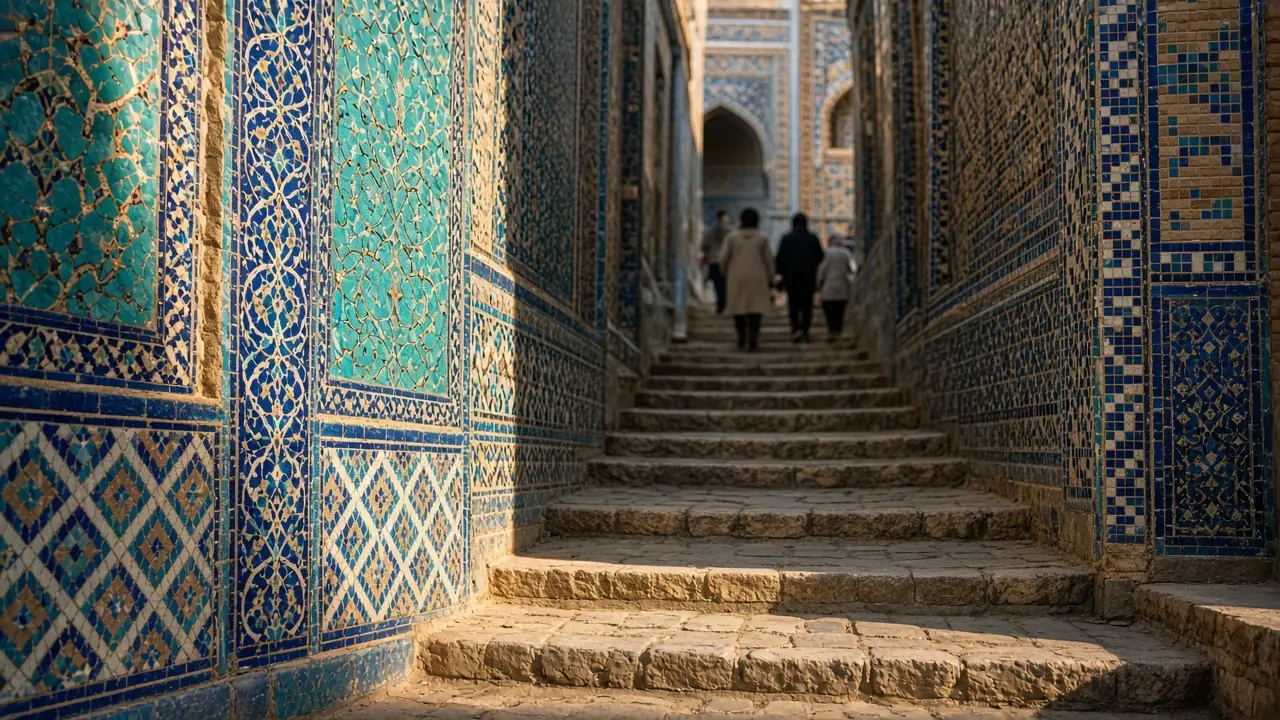
Shah-i-Zinda: how to see more than the turquoise passage in a photograph
In photographs Shah-i-Zinda often looks like a narrow passage between bright facades. On site it is an ensemble of mausoleums with historic and religious meaning, not one decorative building. It deserves its own part of getting to know Samarkand. The ensemble stands on its own, near ancient Afrasiab, not on Registan square. As you move, the whole view gives way to a portal, then to one ornament, then to the space between the buildings.
 6 min
Uzbekistan·15 Oct 2026
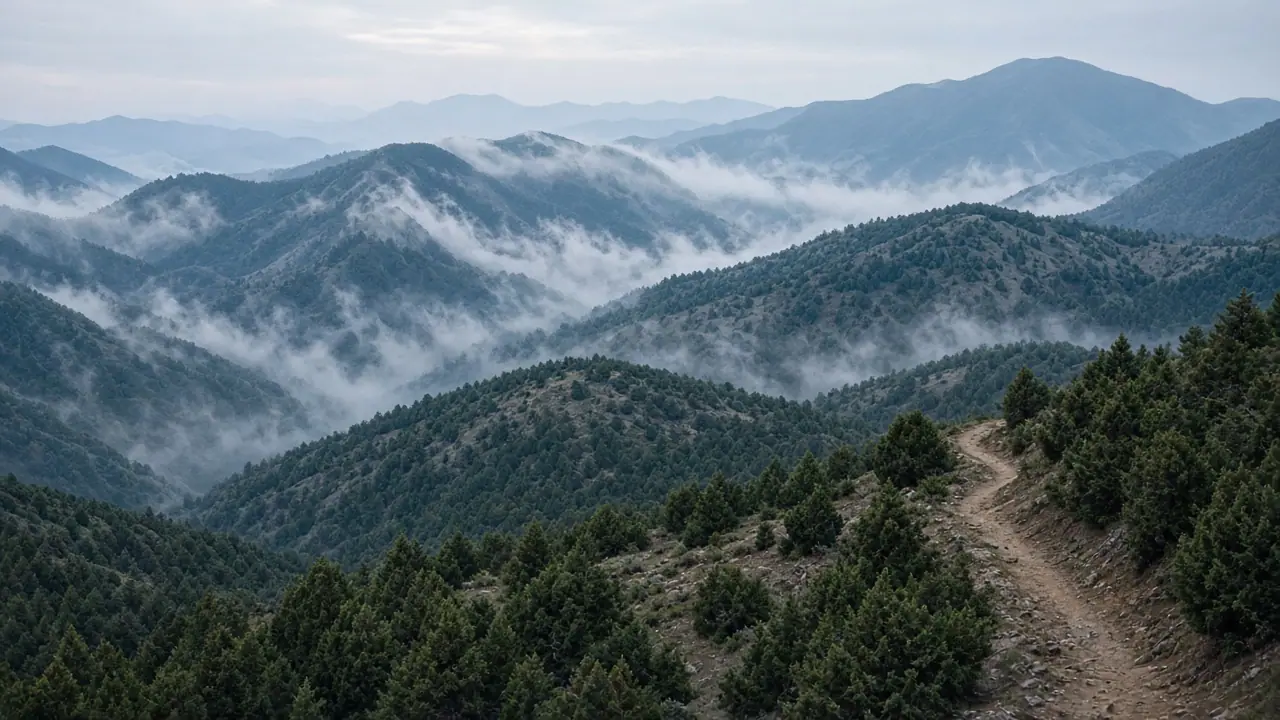
Zaamin: how to plan a rest among mountains and juniper woods
After several days of sightseeing you may want mountains and some unplanned time. Zaamin, in Jizzakh Region, is one such direction. It is known for its landscapes, including juniper woods, called archa locally. The word Zaamin does not explain the trip. A mountain hotel, a walk on a path agreed in advance, and visits to separate sites are different activities. Choose the content of the rest first, and only then build the road around it.
 6 min
Routes·15 Oct 2026
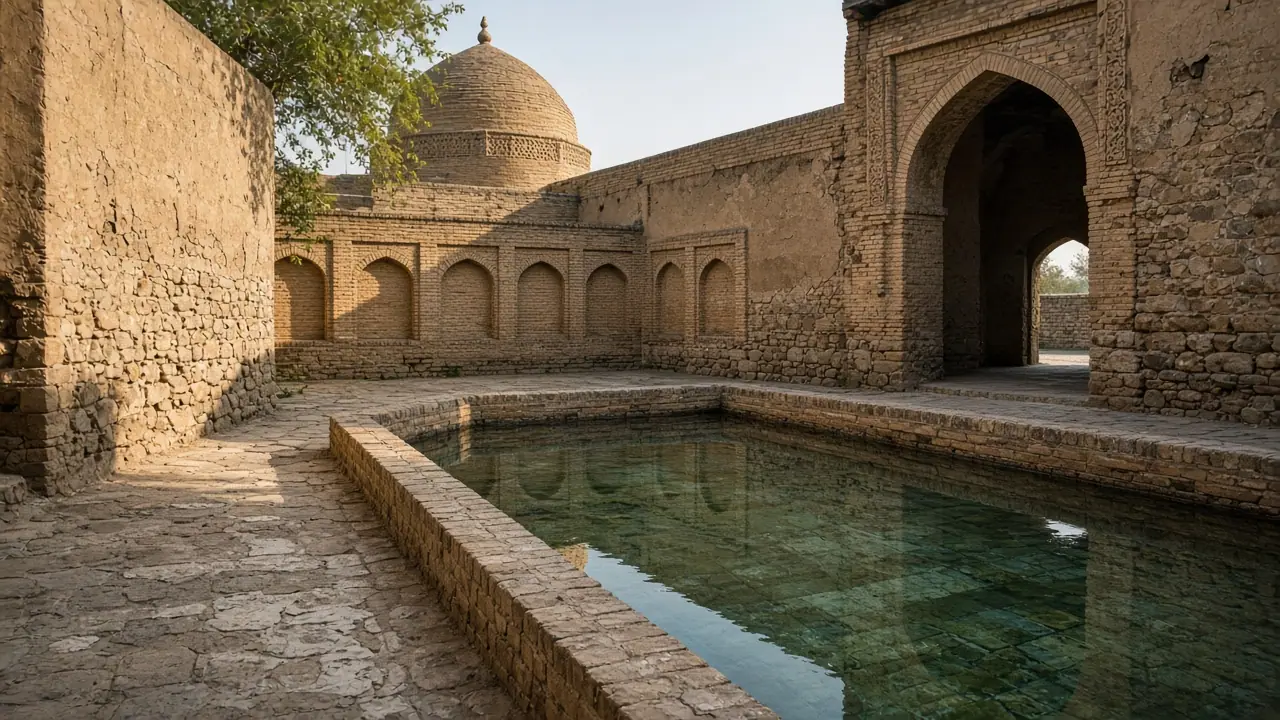
Nurata and the Chashma complex: a stop with a reason of its own
Nurata is often mentioned only as a way to Aydarkul or to a yurt camp. The town deserves more than that: it has its own reason for a stop. The Chashma complex — a spring and the historic buildings beside it — is a subject of its own. It is a revered place, and a visit has to respect people who did not come for a tour. Nurata is in Navoi Region. Putting it into a trip changes the logic of the road. It is no longer a supposedly short detour “on the way”, but its own calculation of stops and time.
