


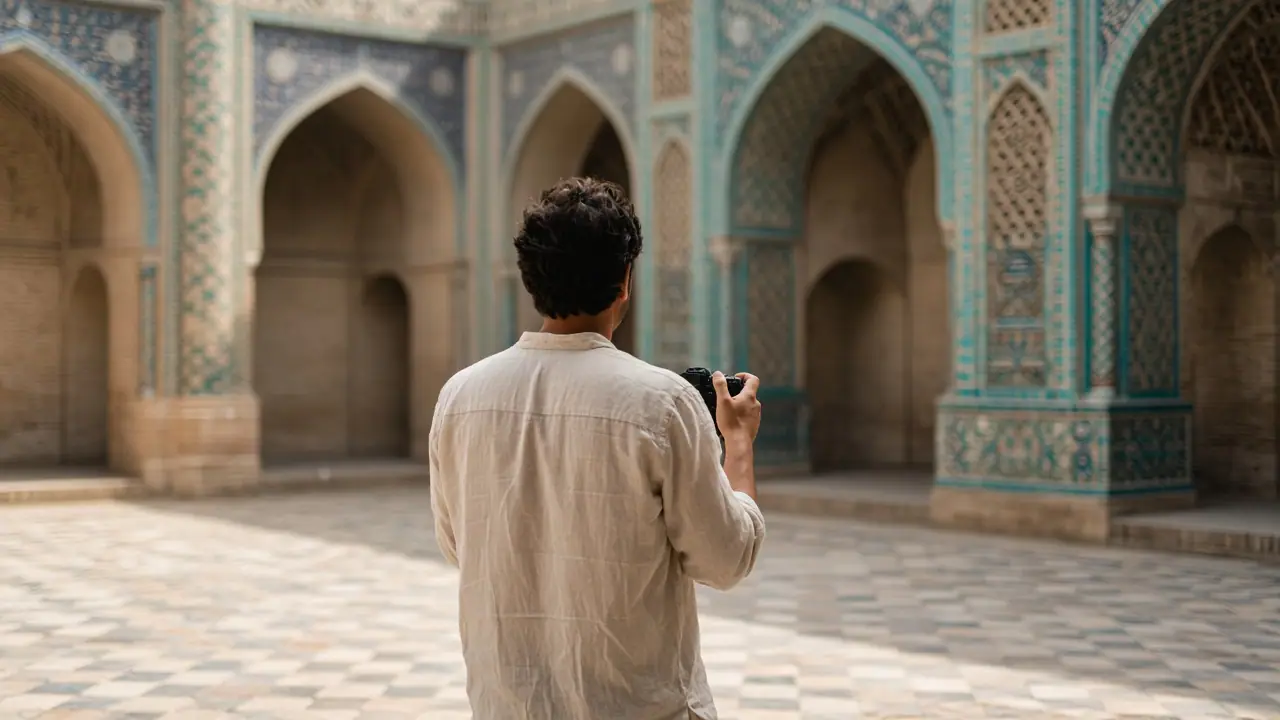
A photo journey through Uzbekistan: a route that still leaves time to look
An expressive frame can come from an ordinary excursion. If shooting is one of the main goals, it has to be built into the day in advance. Otherwise the wish to stay at a facade fights the shared timetable of the group.
A photo journey starts with pace, not with an expensive camera. You need time to look, to understand the light, to wait and sometimes to come back. A few meaningful stops are more useful than an endless list of shots.
Summary
The essentials in a minute
In detail
Choose a theme, not only cities
Architecture needs time for the whole view and for the detail of one ensemble. Craft needs a meeting agreed in advance and permission to watch the work. Street scenes need a calm walk, without getting back into the car every few minutes.
The examples below are separate themes, not a bundle for one day. The maker’s hands in Rishtan: “Rishtan: ceramics and workshops”. A separate visit to Shah-i-Zinda: “Shah-i-Zinda in Samarkand”. The fortresses of Khorezm and open landscape: “Fortresses of Khorezm”. Pick two or three tasks for the whole trip.
Why return to one place
The first visit shows the space. The second lets you concentrate: less that is new around you, more attention for the light and for one detail. That does not mean a second ticket is required. Check the rules of the site. Sometimes the exterior or a walking section is enough.
The point is to leave yourself a choice, not to promise a finished picture. An empty square and a particular light do not go into the plan: both change.
How to agree with a guide
Before booking, say that you need pauses. Ask how flexible the order of stops is, and where the time is already fixed. A group cannot be assumed to wait for one frame. A private format still lives inside working hours, the road and meetings agreed in advance.
If you need a professional photographer, teaching, or photographs of yourself, name that as a separate task. A guide, a driver and a photographer are different roles. How to choose the format of a trip is covered in “Group or private tour”.
People and workplaces
In a workshop, ask about the conditions for photography first. Do not interrupt the work for another take without consent. For a close portrait, ask permission. In religious places, respect the visitors and the rules in force.
A good frame does not need a blocked passage, interference with prayer, or a step past a barrier. If a calm photograph is not possible, that shot is better skipped.
Less gear, a clearer plan
Carry what you will actually carry all day. Think about charging, memory and how you save files. Complex gear does not replace time on site.
In a request to NarminTour, include the dates, the photographic themes and the pace. Instead of “show everything beautiful”, name the priorities: unhurried architecture, one workshop, a free evening, a possible return.
Takeaway
Conclusion
A route for photography is built from pace and a few clear tasks, not from a promise of an empty square. Accompaniment, pauses and separate roles are agreed in advance. A finished picture does not follow from the name of the trip. A private pace is closer to “Along the Great Silk Road VIP” and “Untouched Beauty VIP”. These are not photo tours: the card does not include a photographer.
FAQ
Frequently asked questions
01Do you need a professional camera?+
02Can shooting be combined with an ordinary group tour?+
03Will the guide advise camera settings?+
More from the blog
Read next
 6 min
6 minCities·15 Oct 2026
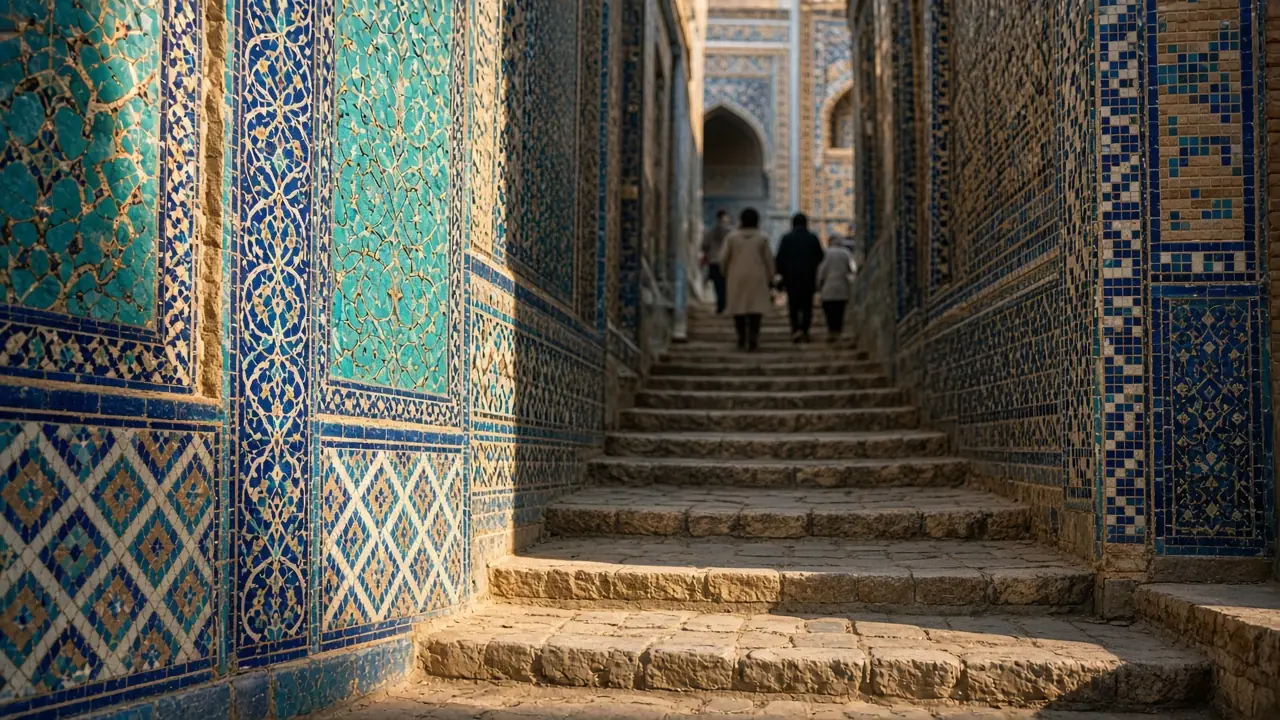
Shah-i-Zinda: how to see more than the turquoise passage in a photograph
In photographs Shah-i-Zinda often looks like a narrow passage between bright facades. On site it is an ensemble of mausoleums with historic and religious meaning, not one decorative building. It deserves its own part of getting to know Samarkand. The ensemble stands on its own, near ancient Afrasiab, not on Registan square. As you move, the whole view gives way to a portal, then to one ornament, then to the space between the buildings.
 6 min
6 minUzbekistan·15 Oct 2026
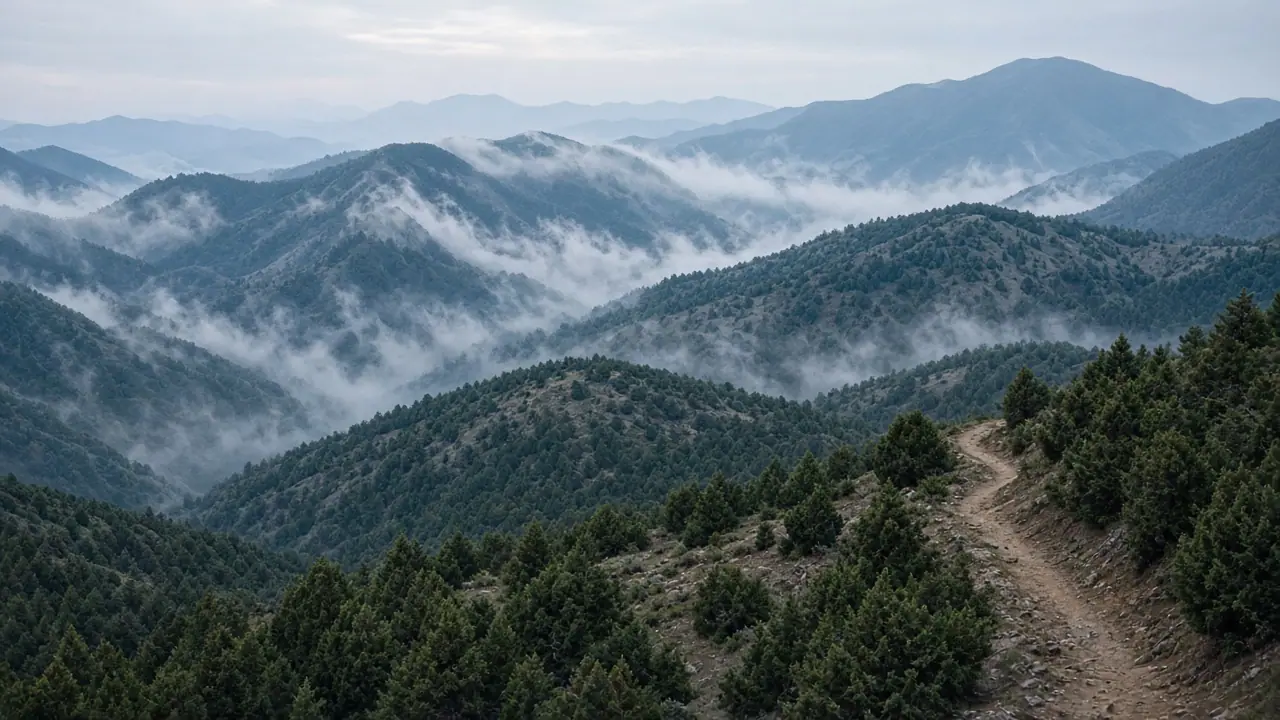
Zaamin: how to plan a rest among mountains and juniper woods
After several days of sightseeing you may want mountains and some unplanned time. Zaamin, in Jizzakh Region, is one such direction. It is known for its landscapes, including juniper woods, called archa locally. The word Zaamin does not explain the trip. A mountain hotel, a walk on a path agreed in advance, and visits to separate sites are different activities. Choose the content of the rest first, and only then build the road around it.
 6 min
6 minRoutes·15 Oct 2026
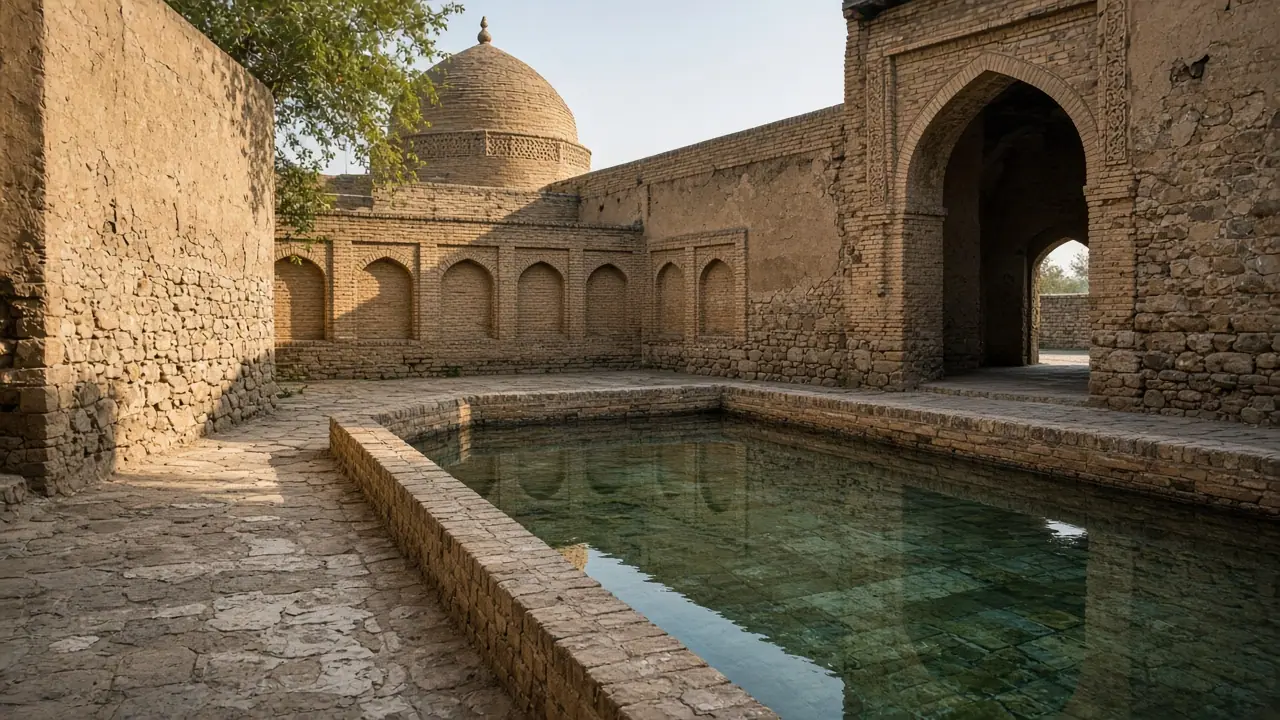
Nurata and the Chashma complex: a stop with a reason of its own
Nurata is often mentioned only as a way to Aydarkul or to a yurt camp. The town deserves more than that: it has its own reason for a stop. The Chashma complex — a spring and the historic buildings beside it — is a subject of its own. It is a revered place, and a visit has to respect people who did not come for a tour. Nurata is in Navoi Region. Putting it into a trip changes the logic of the road. It is no longer a supposedly short detour “on the way”, but its own calculation of stops and time.
